Launch offer — valid today only

📄 Digital book in PDF · read it on your phone or print it

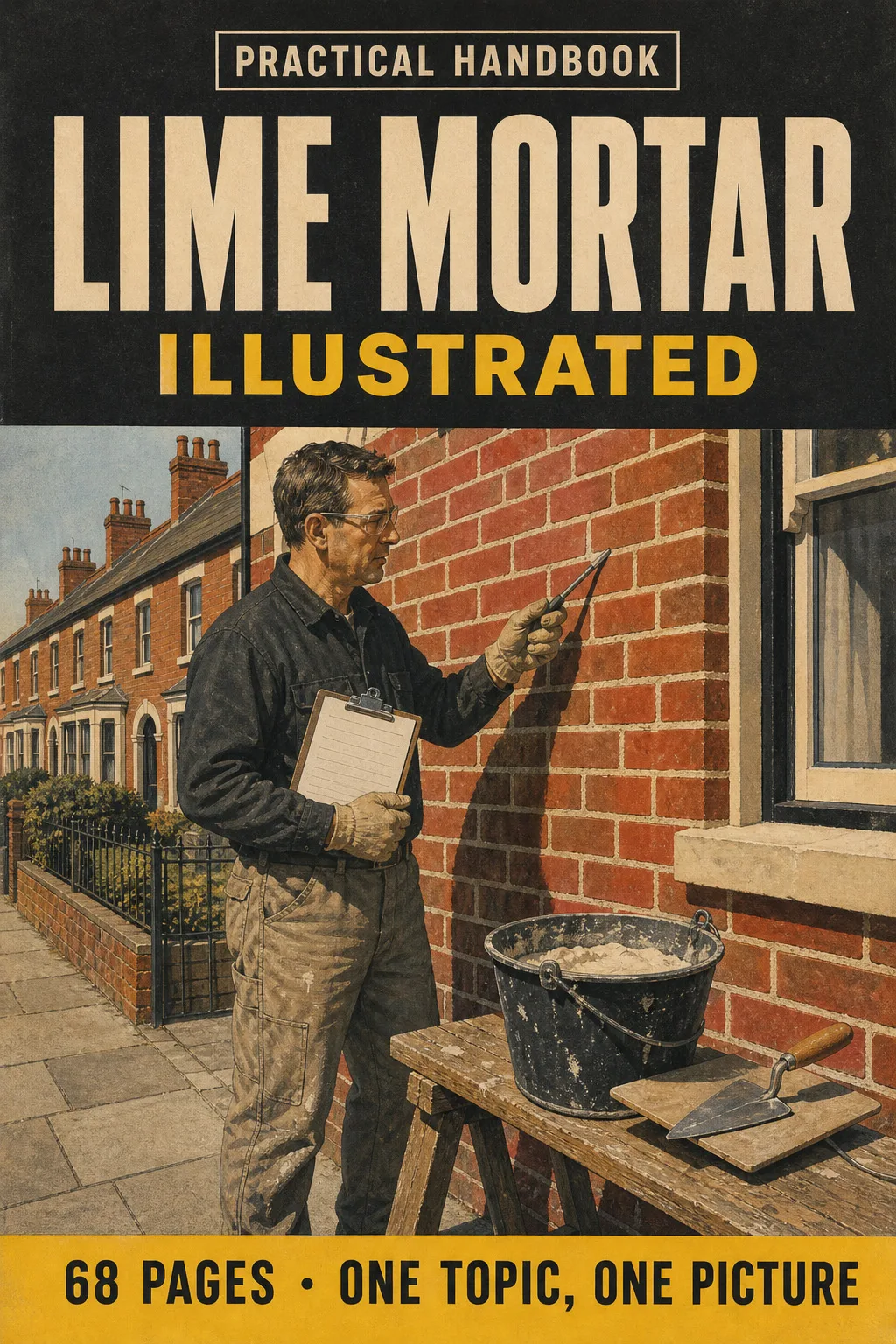
Lime Mortar for Britain's Pre-1919 Solid Walls, in Drawings Every Job in the Same Order

For UK brick and stone walls built before 1919: the survey, which lime and which mix, repointing, three-coat plaster, limewash and curing. One topic per page, drawing first. PDF by email, ready to print and take on site. 68 illustrated pages.

GIVE ME THE 68 ILLUSTRATED PAGES

🔒 Secure checkout · PDF by email · 30-day guarantee
Every topic, its own pageEach job drawn, with the explanation alongside
68 illustrated pages9 parts, from how a solid wall breathes to the maintenance calendar
Up-to-date sourcesHistoric England, SPAB and BS EN 459-1
PDF by emailFormat

Look Inside the Book

Every page has one big drawing and a box with the mixes, depths and steps you need to know:

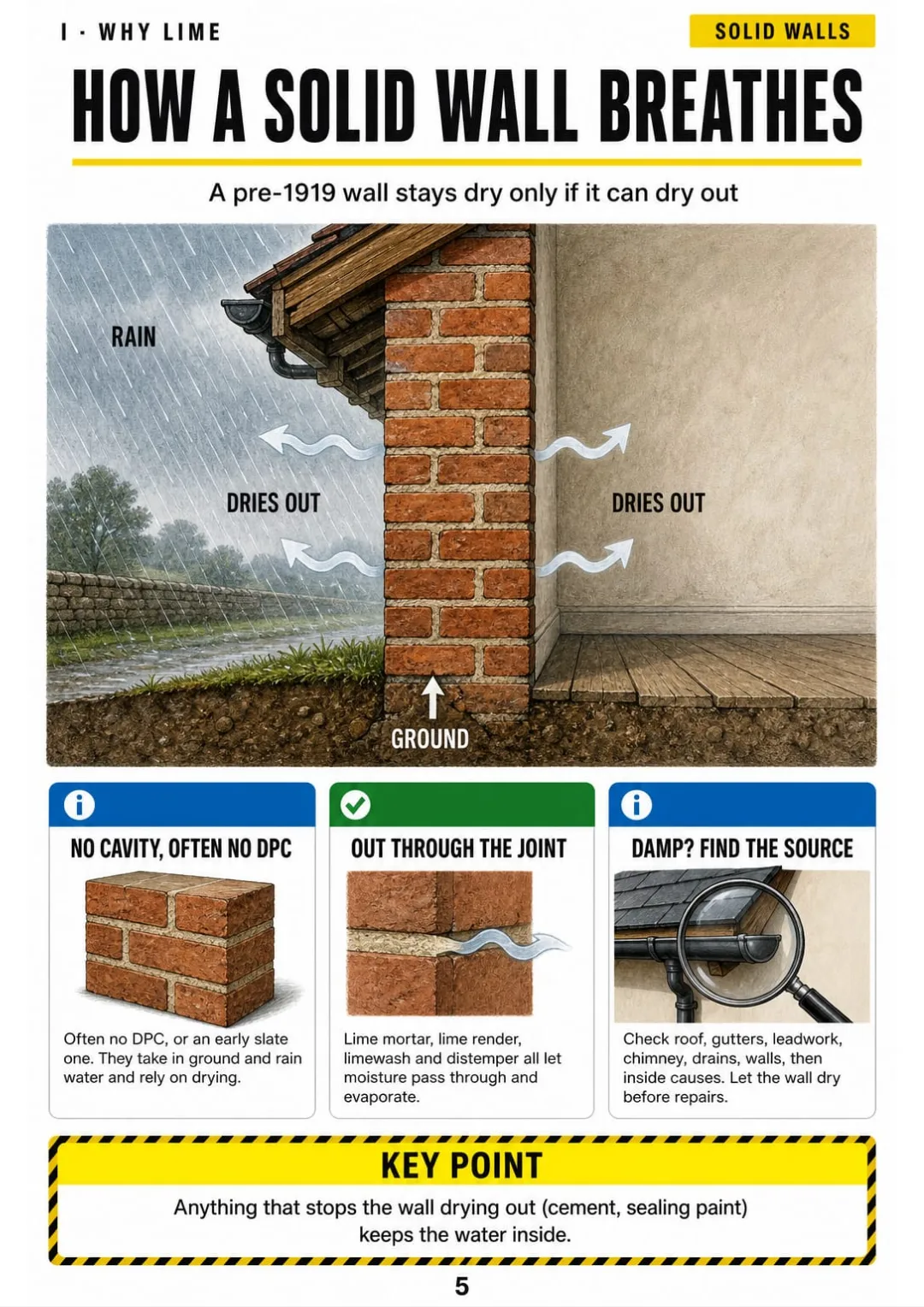
Pre-1919 solid wall in section: water in from ground and rain, out through joints and faces.
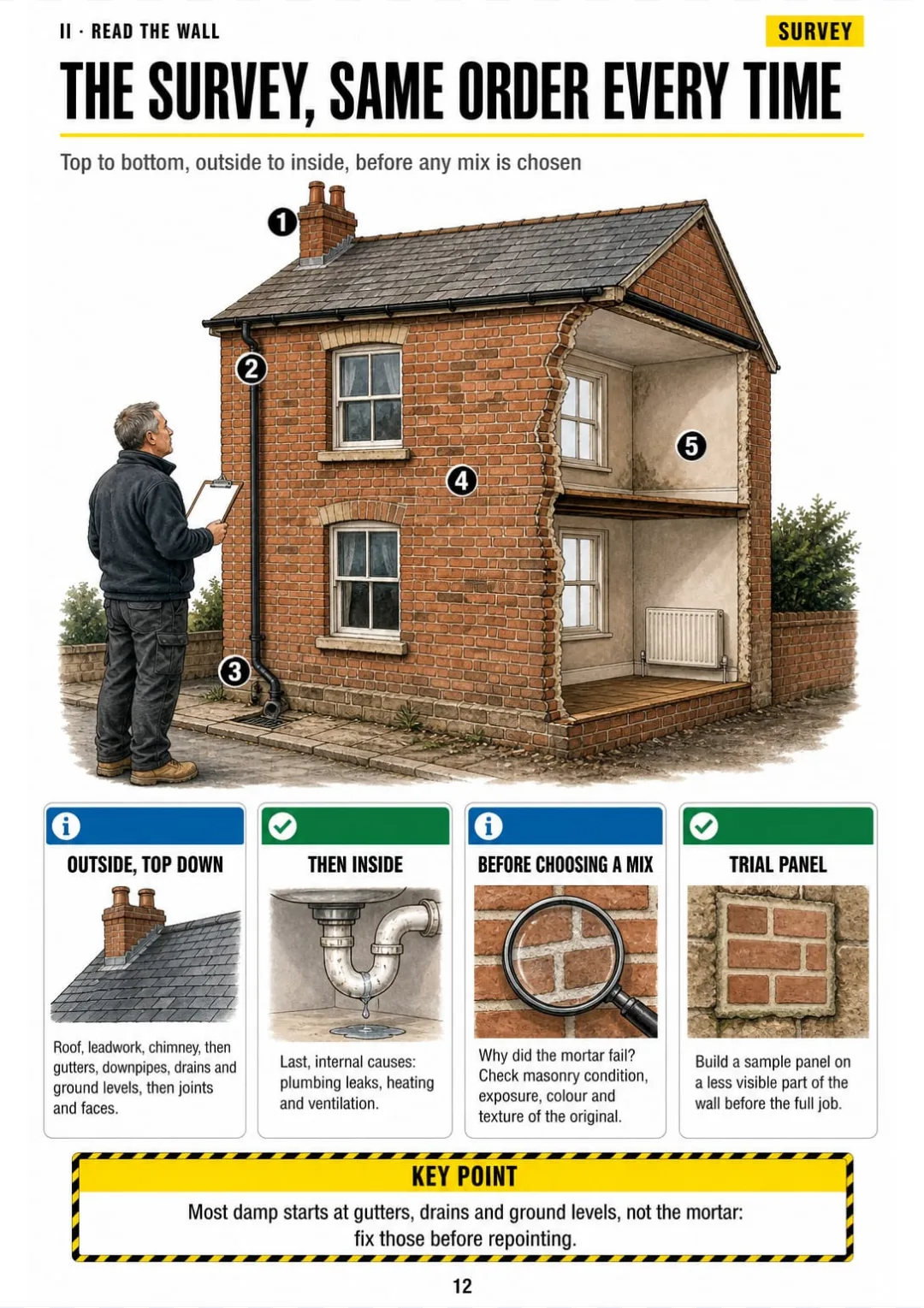
Roof, gutters, drains, walls, then inside: the five-step survey before any repair.
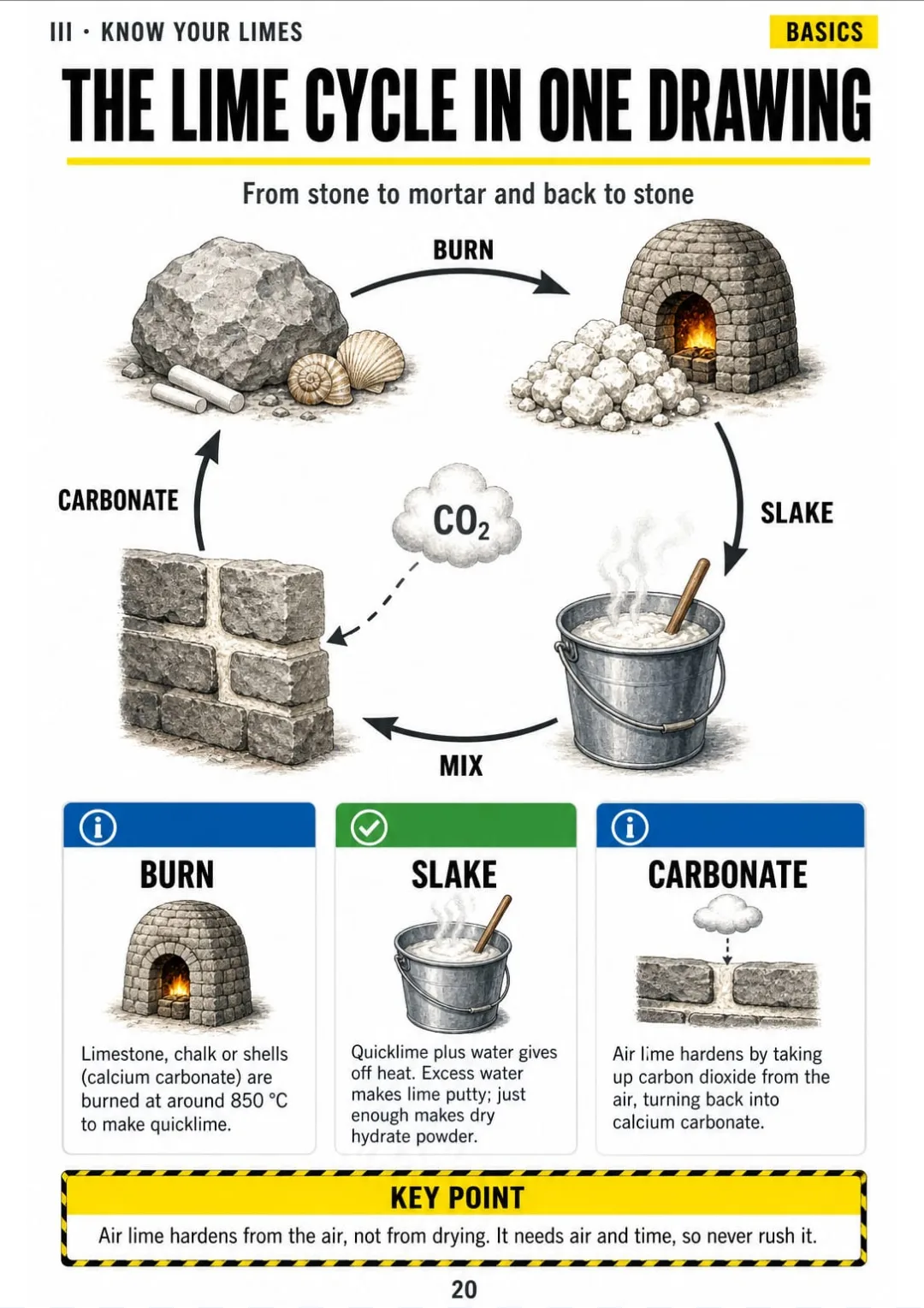
Burn at about 850 °C, slake, mix, then carbonation closes the cycle back to stone.
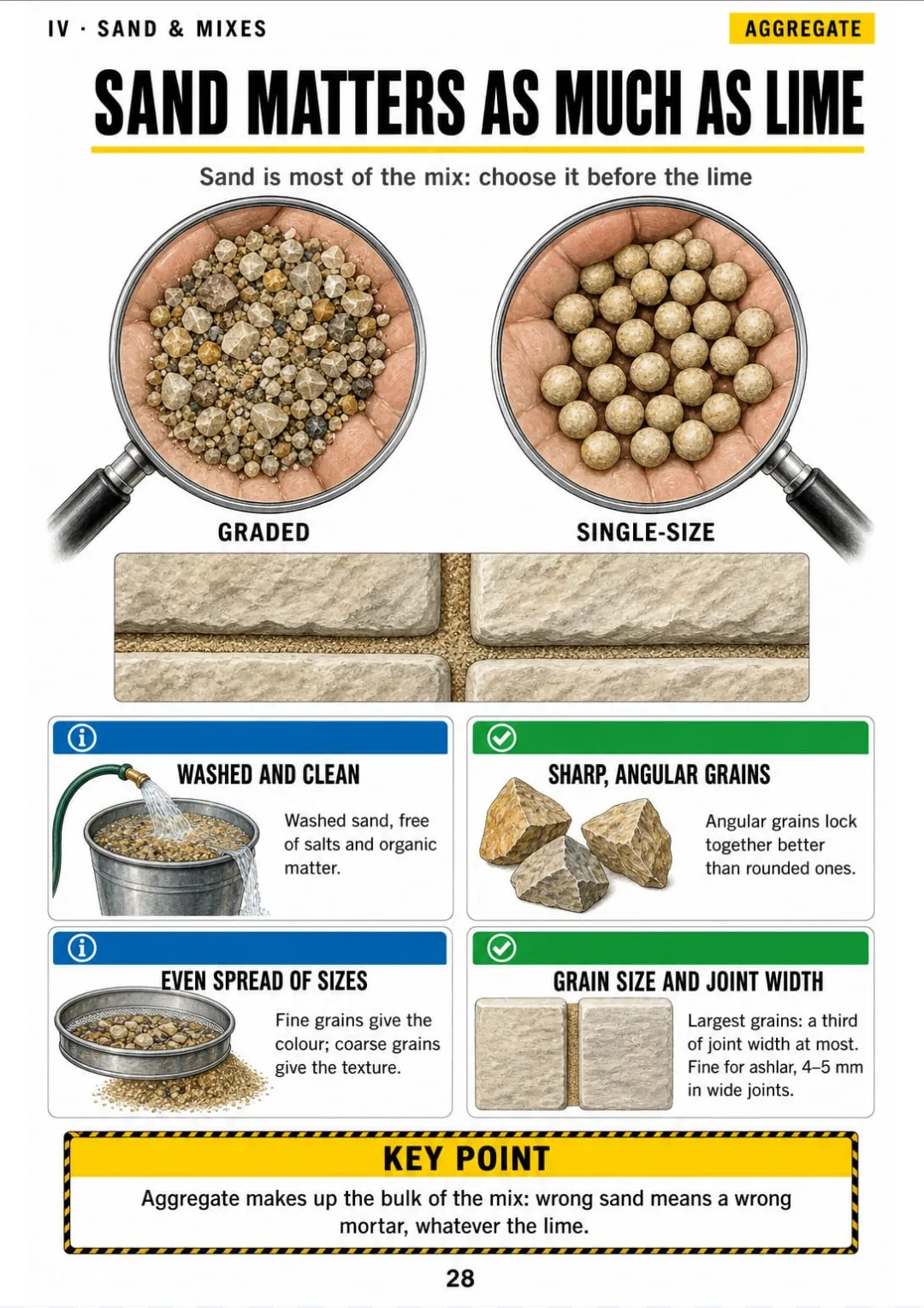
Graded vs single-size sand, and the one-third rule for ashlar joints
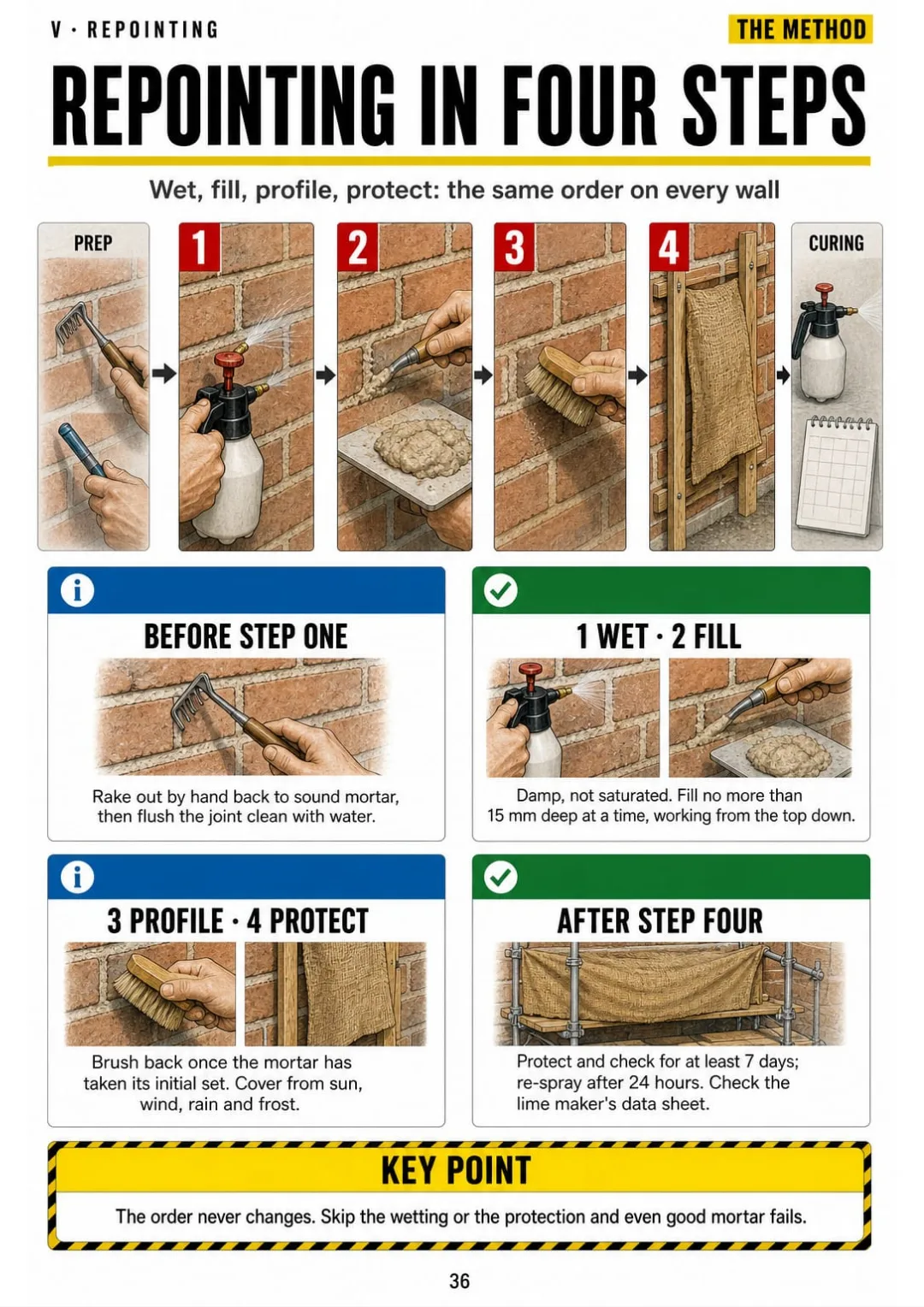
Wet, fill, profile, protect: the whole repointing job on one page
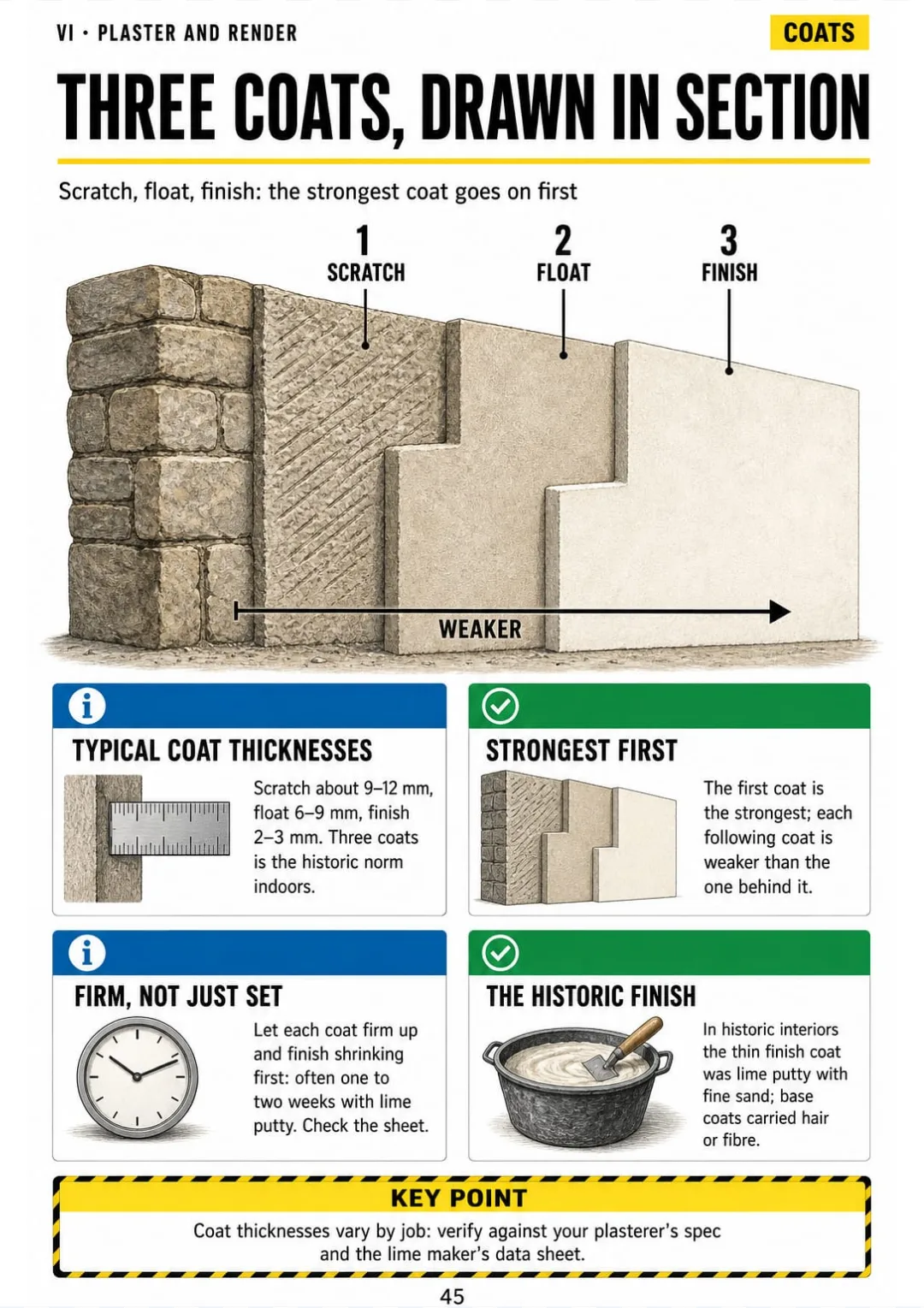
Scratch, float, finish: three coats, strongest first, each one weaker
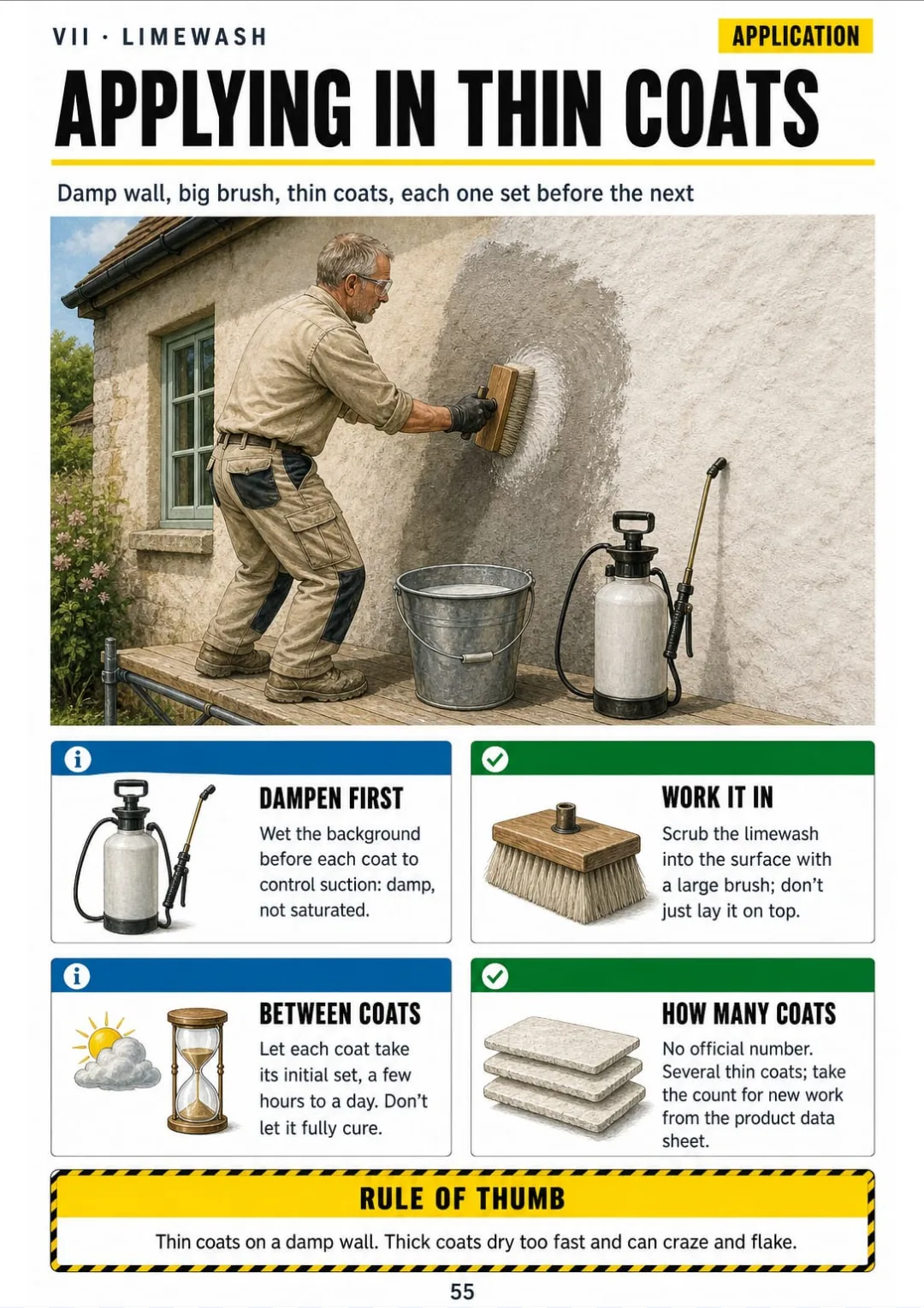
Dampen, brush in thin, wait for initial set (hours to a day) before the next coat
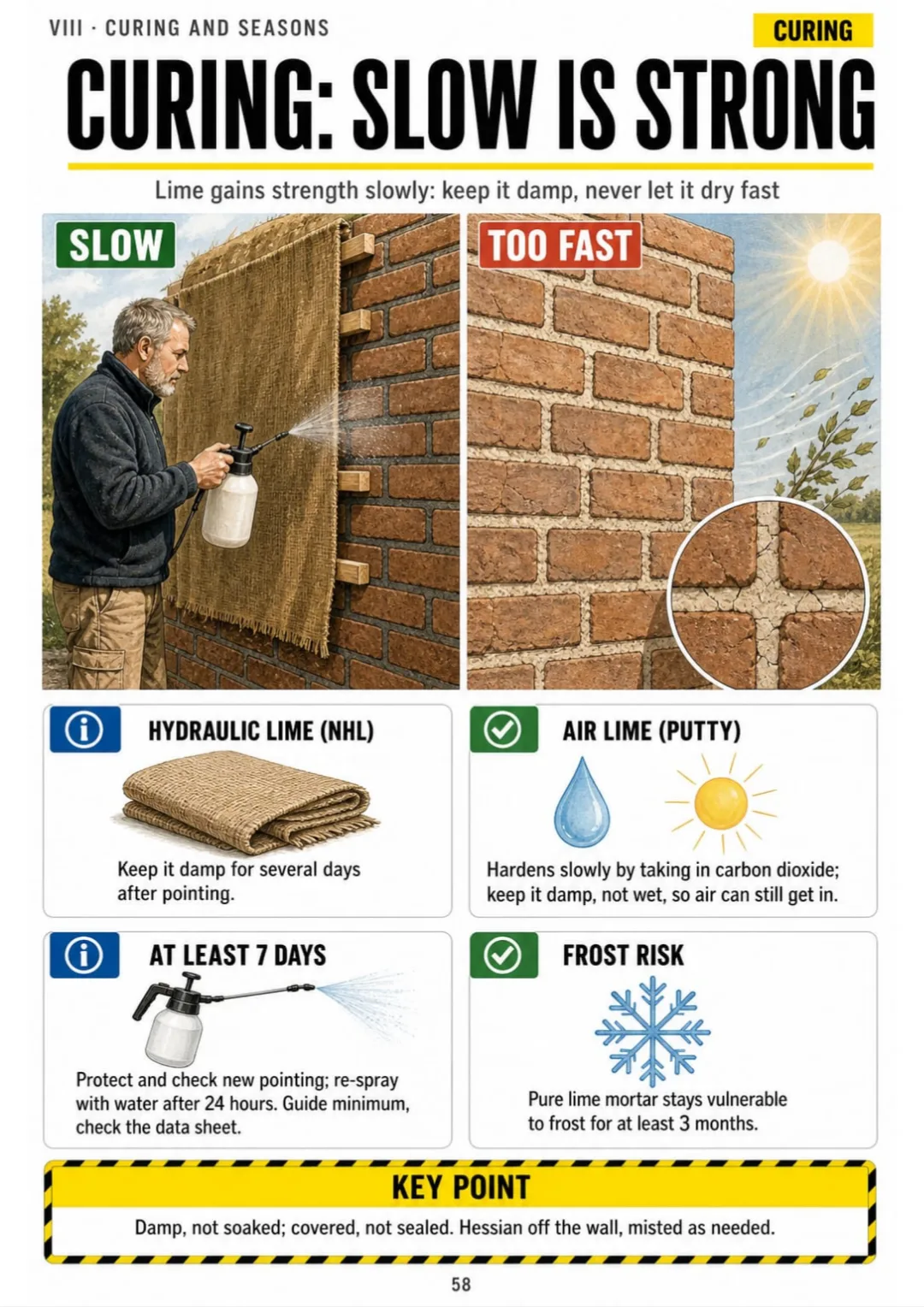
Keep new lime pointing protected and checked for at least 7 days, re-sprayed after 24 hours.

Swipe to see more →

These are real pages from the book. The table of contents is the full one: 9 parts and 64 topics.

The Problem Isn't You. It's How It Was Explained.

You're at the builders' merchant with a bag of NHL 3.5 in one hand and a tub of lime putty in the other, and you can't say which one your wall actually needs.

You've read up on it. But the guides explain calcining, slaking and carbonation in long paragraphs, and ten videos give you ten different answers.

Burn at about 850 °C, slake, mix, then carbonation closes the cycle back to stone.

In this book the choice is drawn: lime putty, NHL 2, NHL 3.5 and NHL 5, each one next to the jobs it suits, and beside it the lime cycle as a circle you can follow with your finger: burnt, slaked, mixed, carbonating back to stone.

Hydraulic lime against putty, the right sand, the usual ratios, how wet is right, storing the bag: each one gets its own page.

Which lime suits which job, the usual ratios and two worked batches sit side by side, so you go to the merchant knowing which bag to ask for, then check it against the manufacturer's data sheet.

COMPARE FOR YOURSELF

The Same Topic, Two Ways to Learn It

THIS
  • The manual: line after line of text
  • Surveys and repairs explained in words alone
  • You reach the wall still unsure
Prior to the commencement of any remedial works to traditional solid masonry, a systematic inspection of the building envelope should be undertaken, proceeding from the uppermost elements downwards. Particular attention should be given to the condition of roof coverings, flashings and valley details, followed by an assessment of rainwater goods, including gutters, hoppers and downpipes, and of below-ground drainage. Only once external sources of moisture ingress have been identified and addressed should the condition of the wall faces and the internal finishes be evaluated.
FOR THIS
  • The survey in one drawing
  • The five steps in a box
  • You see it and you get it
Roof, gutters, drains, walls, then inside: the five-step survey before any repair.
CONTENTS

Take a Look at the 9 Parts and 64 Topics

Why old walls need lime, reading the wall, the limes, sand and mixes, repointing, plaster and render, limewash, curing and permissions, and the checklists: 68 pages, all illustrated

IWhy Old Walls Need Lime · pp. 5-11
  1. How a solid wall breathes
  2. The mortar is meant to be the weak link
  3. What cement does to an old wall
  4. Cement render and trapped damp
  5. Gypsum plaster and modern paint on lime walls
  6. Is your house a lime house?
  7. Lime is caustic: safety first
IIRead the Wall Before You Touch It · pp. 12-19
  1. The survey in the same order every time
  2. Old lime mortar or later cement?
  3. Reading the joint profile
  4. When a joint needs repointing
  5. Ground levels and the damp line
  6. Rising, penetrating or condensation?
  7. Salts on the surface
  8. Brick or stone? Matching the mortar to the masonry
IIIKnow Your Limes · pp. 20-27
  1. The lime cycle in one drawing
  2. Lime putty (non-hydraulic)
  3. Natural hydraulic lime: NHL 2, 3.5 and 5
  4. Which NHL for which job
  5. Hot-mixed lime mortar
  6. Read the bag before you buy
  7. Avoid: hydrated lime 'with a splash of cement'
  8. Storing lime putty and NHL
IVSand, Mixes and Worked Batches · pp. 28-35
  1. Sand matters as much as the lime
  2. Matching the colour and texture
  3. Mixing by volume, not by shovel
  4. The usual ratios
  5. Worked batch: NHL 3.5 pointing
  6. Worked batch: lime putty mortar
  7. How wet is right?
  8. Pozzolans and additives: when and why
VRepointing Step by Step · pp. 36-44
  1. Repointing in four steps, always in this order
  2. Raking out without damaging the brick
  3. How deep to rake out
  4. Clean and wet the joint
  5. Fill in layers
  6. Perpends first, then beds
  7. Profile when it is thumb-hard
  8. Keep the face clean
  9. Pointing stone and wide rubble joints
VIPlaster and Render · pp. 45-52
  1. Three coats, drawn in section
  2. Preparing the background
  3. Hair and fibre in the base coats
  4. Scratch coat and key
  5. Floating and the devil float
  6. Finish coat and trowelling
  7. External lime render
  8. Patching old lime plaster
VIILimewash and Breathable Finishes · pp. 53-57
  1. What limewash is and isn't
  2. Making a batch of limewash
  3. Applying in thin coats
  4. Weather for limewashing
  5. Breathable paints: what to check
VIIICuring, Seasons and Permissions · pp. 58-62
  1. Curing: slow is strong
  2. Spring and autumn
  3. Summer
  4. Winter and frost
  5. Listed buildings and conservation areas
IXChecklists and Common Mistakes · pp. 63-68
  1. The most common repointing mistakes
  2. The most common plaster and render mistakes
  3. Pre-job checklist
  4. Key numbers at a glance
  5. Which lime for which job: the decision tree
  6. Maintenance calendar for an old house

One Page, One Topic, All Clear

Think of it this way:

It's a dry Saturday in April. The scaffold is up, the joints on the front of your terrace are crumbling, and you need to know how deep to rake out before the first chisel goes in.

You open the page on raking out and see the joint drawn in section: the depth marked on the drawing, the brick edges left untouched, and the tool held the right way.

Wet, fill, profile, protect: the whole repointing job on one page

Same with the mix, the three coats of plaster, limewash and curing in hot weather: each one has its own page, drawn the same way.

Lime Mortar Illustrated is 9 parts and 64 topics, all drawn, ending with the common mistakes, the key numbers at a glance and a maintenance calendar for an old house.

What you see drawn, you don't have to memorize.

What's Inside Lime Mortar Illustrated:

Ipp. 5-11

Why Old Walls Need Lime

How a solid wall breathes, why the mortar is the weak link, what cement, gypsum and modern paint do to an old wall, and lime safety.

IIpp. 12-19

Read the Wall Before You Touch It

The survey in the same order, old lime or later cement, joint profiles, ground levels, the three kinds of damp, salts and matching mortar to brick or stone.

IIIpp. 20-27

Know Your Limes

The lime cycle, lime putty, NHL 2, 3.5 and 5 and which job each suits, hot-mixed lime, reading the bag and storage.

IVpp. 28-35

Sand, Mixes and Worked Batches

Sand grading, colour and texture, mixing by volume, the usual ratios, two worked batches, how wet is right and additives.

Vpp. 36-44

Repointing Step by Step

Raking out, how deep, wetting, filling in layers, perpends before beds, profiling when thumb-hard, a clean face and stone joints.

VIpp. 45-52

Plaster and Render

Three coats in section, the background, hair and fibre, scratch coat and key, floating, the finish coat, external render and patching.

VIIpp. 53-57

Limewash and Breathable Finishes

What limewash is and isn't, making and applying a batch, the weather it needs and what to check in a breathable paint.

VIIIpp. 58-62

Curing, Seasons and Permissions

Curing slowly, working in spring, autumn, summer and frost, and when listed building consent or conservation area rules may apply.

IXpp. 63-68

Checklists and Common Mistakes

Common repointing and plaster mistakes, the pre-job checklist, key numbers, the decision tree and a maintenance calendar.

At the end of the book: A pre-job checklist, the key numbers at a glance, a lime decision tree and a maintenance calendar.

Plus: 2 Free Books

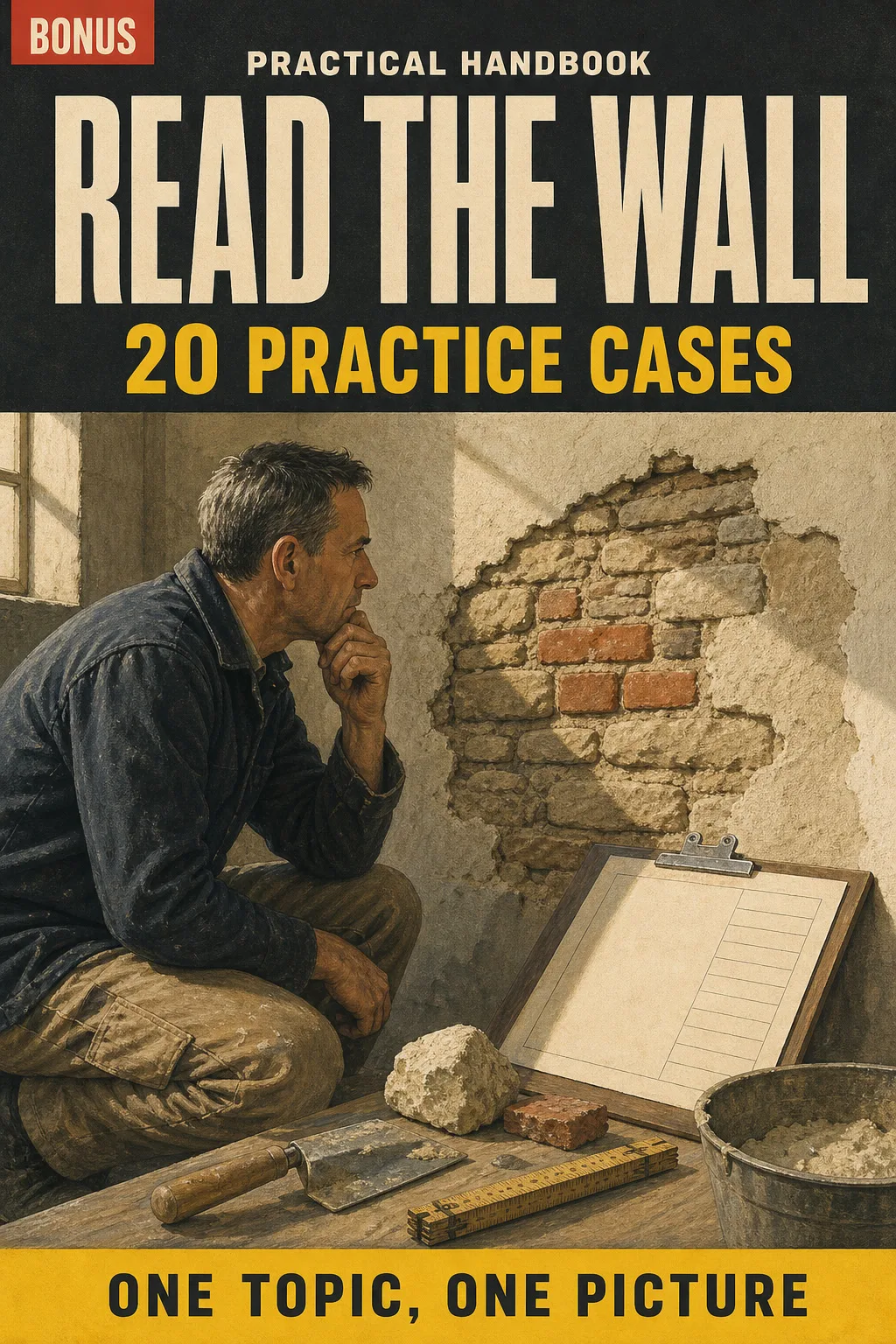
Read the Wall: 20 Practice Cases

BONUS 1: «Read the Wall: 20 Practice Cases»

Value on its own: US$ 17.90

Twenty drawn walls to diagnose yourself: spot the old mortar, the failing joints and the real cause of the damp before you pick up a tool.

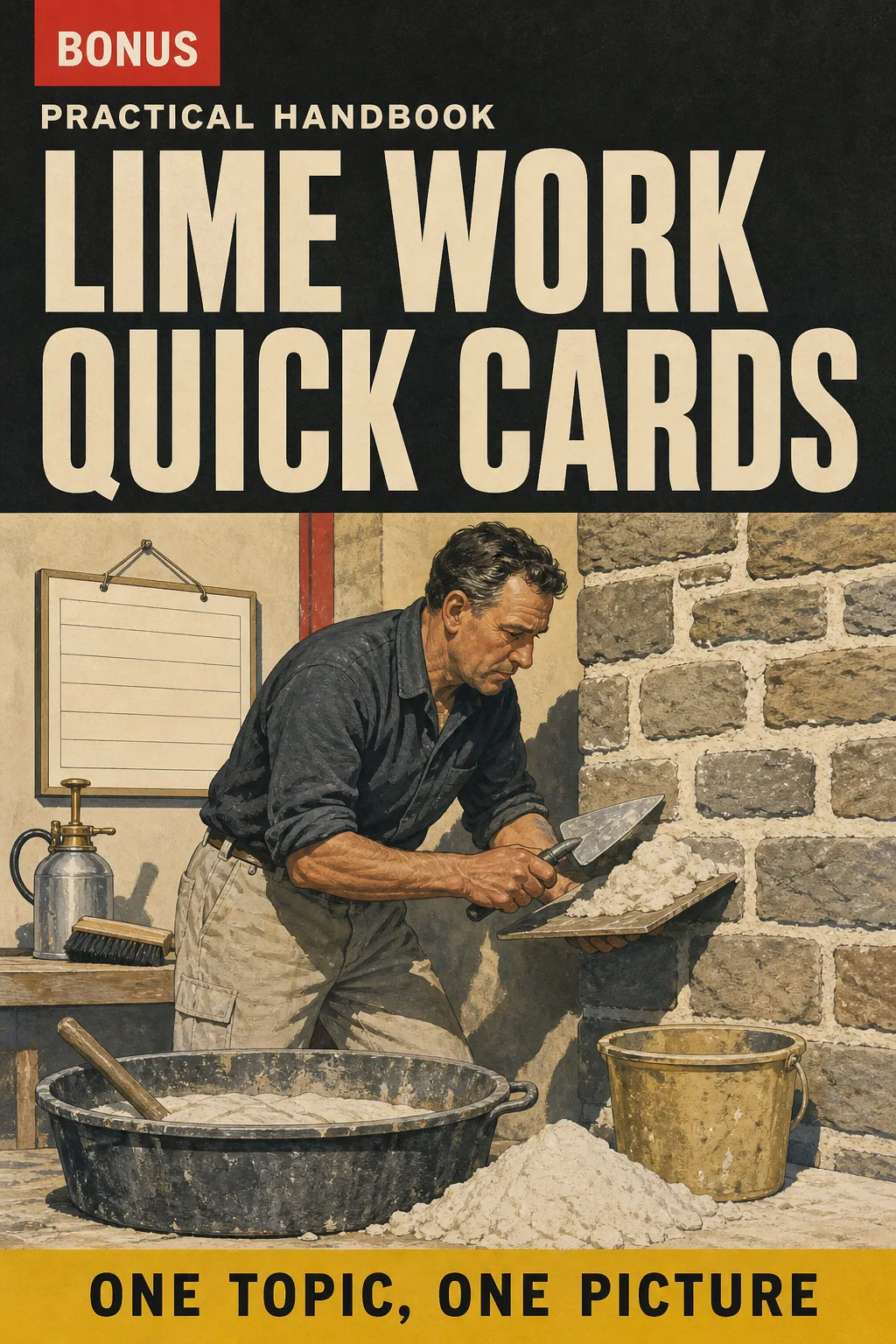
Lime Work Quick Cards

BONUS 2: «Lime Work Quick Cards»

Value on its own: US$ 14.90

The common mistakes and the key numbers (mixes, raking-out depth, curing) on printable cards you keep on site.

Lime Mortar Illustrated with 2 Free Books

  • Lime Mortar Illustrated: 68 illustrated pagesUS$ 63
  • BONUS 1: Read the Wall: 20 Practice CasesUS$ 17.90
  • BONUS 2: Lime Work Quick CardsUS$ 14.90
  • High-resolution PDF to printIncluded
Total value US$ 95.80
YOUR PRICE:
US$ 27
You save US$ 68.80
YES, I WANT LIME MORTAR ILLUSTRATED FOR US$ 27

📄 This is a digital PDF book sent to your email: nothing is printed or shipped.

Secure purchaseEncrypted payment30-day guarantee

PDF by email: We email you Lime Mortar Illustrated as a PDF, together with the two free books. It's a single payment: no installments, no extra charges.

Who This Book Is For

You've just bought an old house

You've just bought an old house

Read the walls before anyone touches them with cement: old mortar, joints and damp, drawn page by page.

The scaffold goes up this season

The scaffold goes up this season

The survey, the mix and the four repointing steps in the same order, printed and ready on site.

You're a builder taking on lime jobs

You're a builder taking on lime jobs

What changes from cement: the mix, the raking-out depth and the curing, one page each.

Everything You Get Today

US$ 95.80US$ 27
YES, I WANT LIME MORTAR ILLUSTRATED FOR US$ 27

📄 This is a digital PDF book sent to your email: nothing is printed or shipped.

30DAYS
GUARANTEE

30-Day Guarantee

Try Lime Mortar Illustrated for 30 days, bonus books included.

We refund everything if the file won't open, if the book isn't what you see here, if you were charged twice or if the email doesn't arrive. Just email us.

You pay once. No subscriptions.

Frequently Asked Questions

Is it for me if I'm not a builder, or if I already am?

Yes. Homeowners get each job drawn step by step; builders used to cement get the lime-specific parts: mixes, raking-out depth and curing. It's written for pre-1919 solid walls in the UK, brick and stone.

Where does the content come from?

From Historic England technical guidance, SPAB advice on lime, Historic Environment Scotland short guides and the BS EN 459-1 lime classification. Mixes and intervals are flagged to check against the current edition and the lime manufacturer's data sheet.

Is it official material?

No. It's an independent illustrated guide, not published or endorsed by any of those organisations.

Does it replace a course, a surveyor or planning advice?

No. It doesn't replace hands-on training, a survey by a qualified professional or legal advice. For listed buildings and conservation areas there's a page on when consent may be needed and what to ask before you touch the front, and it points you to your local planning authority, which has the final word.

Are the 20 practice cases taken from an official course or assessment?

No. They're written and drawn for this book, so you can practise reading a wall.

When and how do I get it?

As a PDF by email, to the address you enter at checkout. The 2 bonus books come the same way.

Do I have to pay every month?

No. It's a one-off payment.

Can I have it on paper?

Yes: print it at home or at a print shop and keep the pages on site.

How does the refund work?

You have 30 days. We refund everything if the file won't open, if the book isn't what you see on this page, if you were charged twice or if the email doesn't arrive: just email us.

Before You Close This Page

No more standing at the counter unsure which lime your wall needs.

The repointing order is drawn: you see it and get on with it.

You reach the wall knowing where everything is.

Drawings make studying faster.

The book is right below.

One-time payment: US$ 27 · Guarantee: 30 days · PDF by email

YES, I WANT LIME MORTAR ILLUSTRATED FOR US$ 27

📄 This is a digital PDF book sent to your email: nothing is printed or shipped.